|
Chronological History of Washington Park ¨1800 – 1986¨ Copied from Washington Park Conservancy Handbook |
mm
|
IX. APPENDIX: CHRONOLOGICAL HISTORY OF WASHINGTON PARK, ALBANY, NEW YORK |
mm
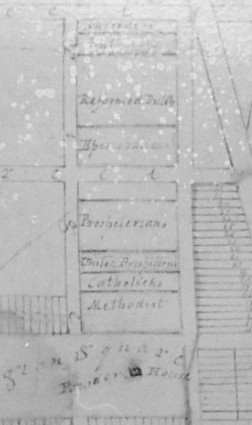
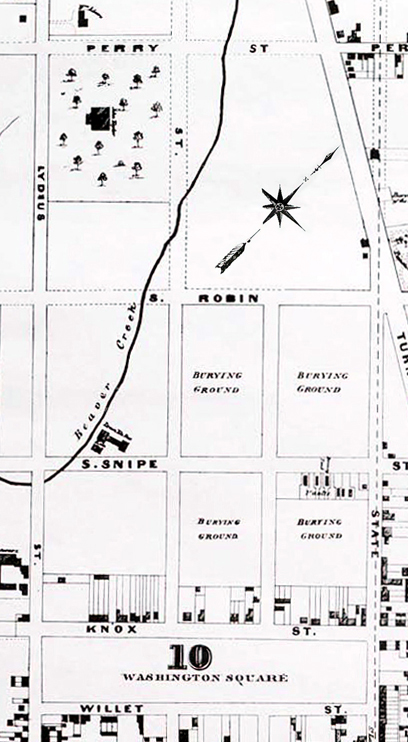
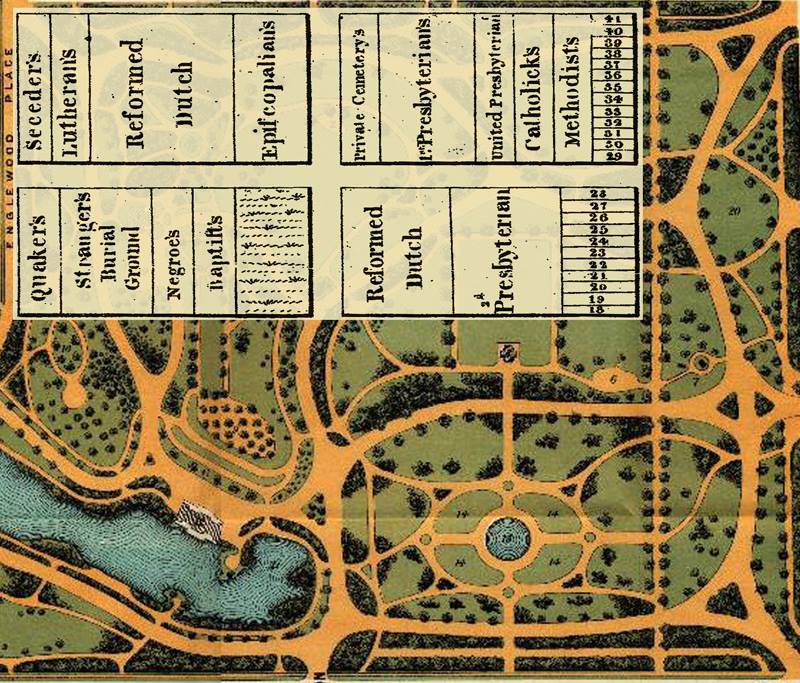
| 1800 | Land south of State Street and west of Knox Street is designated as a city burial ground |
| 1806 | Land between Madison Avenue and State Street, from Willett to Knox Streets, is dedicated as the Middle Public Square. |
| 1809 | The name of Middle Public Square is formally changed to Washington Square |
| 1859 | In an editorial in the Albany Evening Journal, publisher Thurlow Weed urges the city to purchase the land west of the Washington Square parade ground, and which included the site of the old State Street burial grounds, in order to create a public park. |
| 1863 | David Murray and William Barnes present proposals to the city government suggesting different sites for a park. |
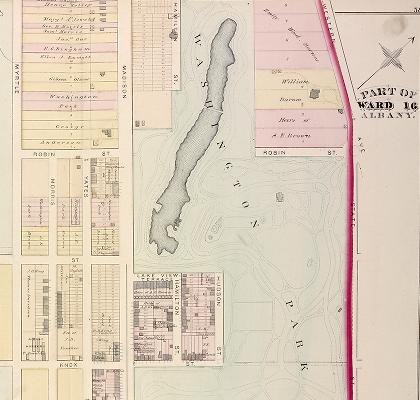
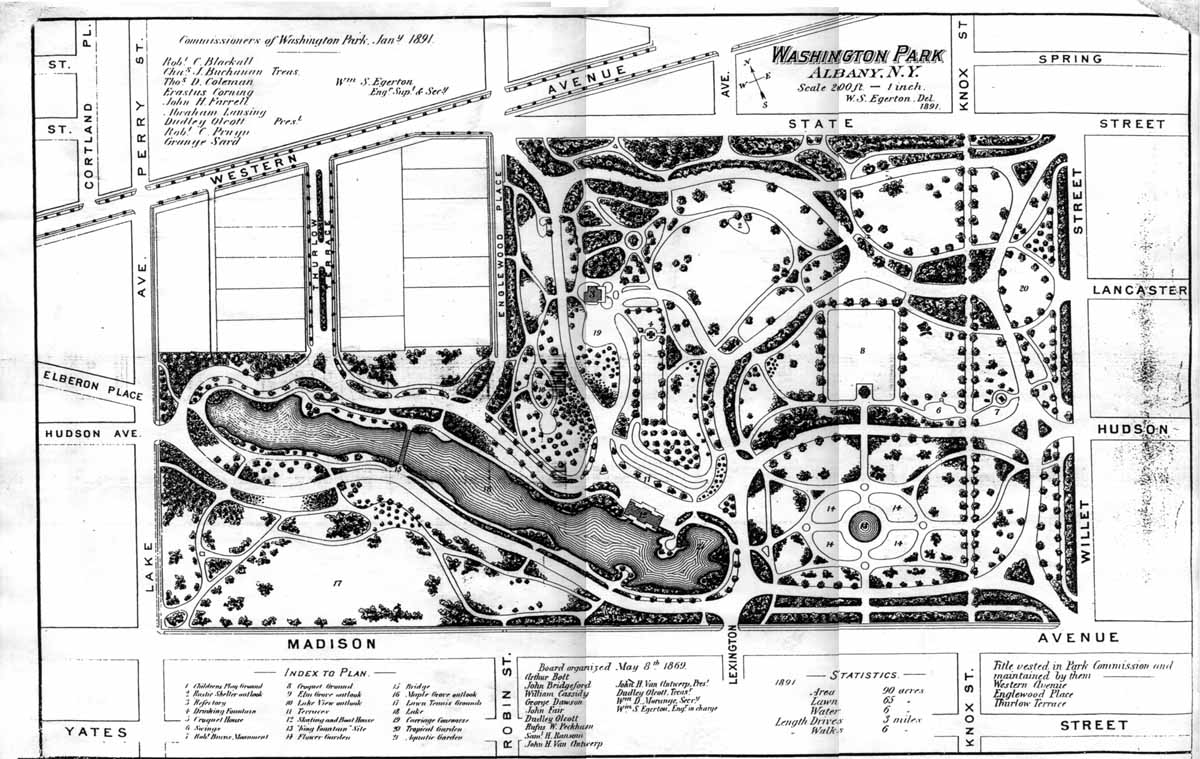
| 1869 | The Board of Commissioners of the Washington Park is created by an act of the State Legislature and entrusted with developing, maintaining, and administering Washington Park. |
| 1870 | The
engineering firm of Bogart, Culyer & Co. is selected to prepare plans and
advise in the laying out of Washington Park. R. H. Bingham, city surveyor,
is appointed chief engineer and superintendent of the park. Real estate is purchased to create a linkage between the parade ground and former burial ground property. |
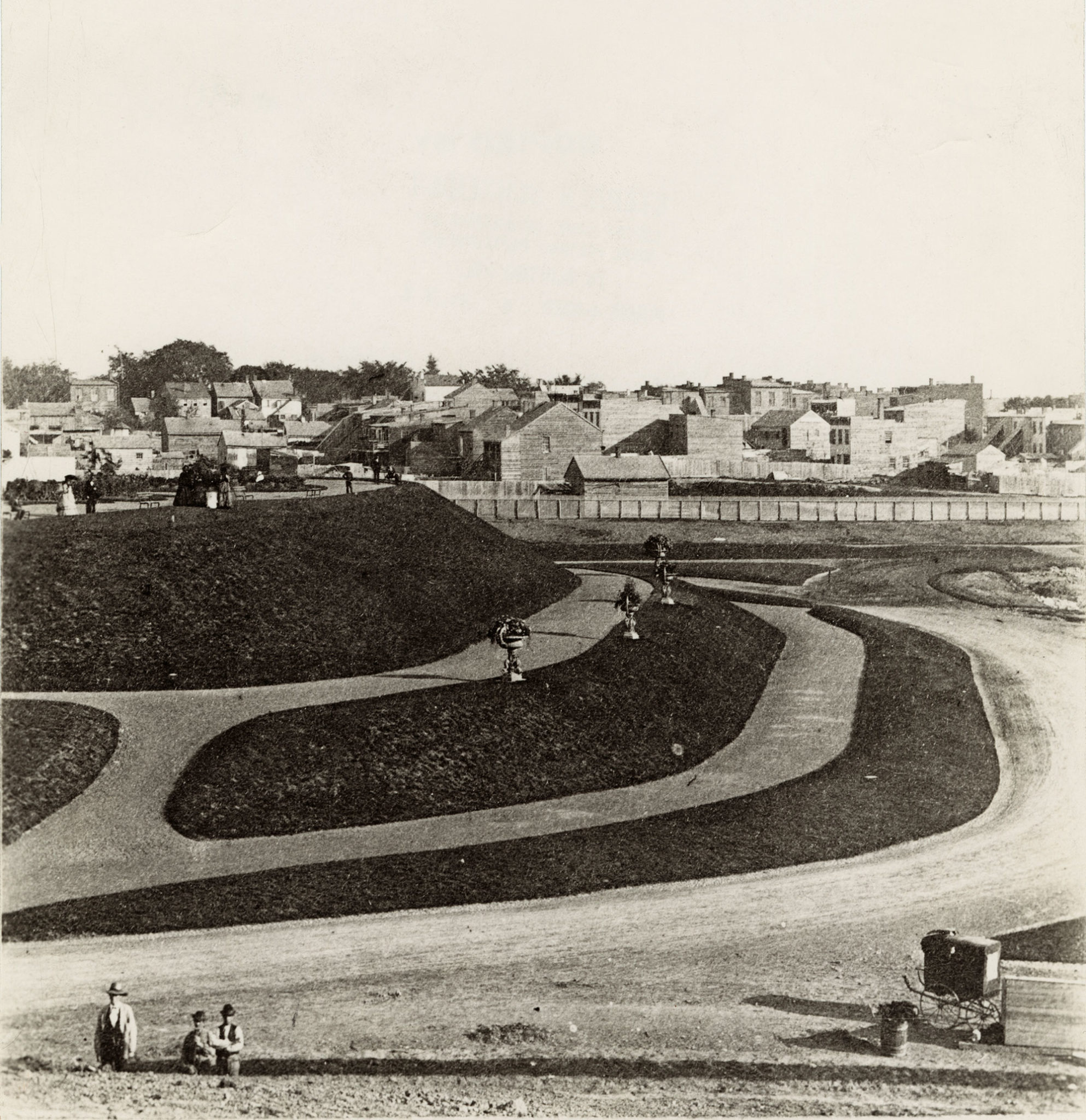
| 1871 | Washington Park is first opened to the public, after the area of the old Washington parade ground is laid out. The Lathrop property, ten acres lying between Madison and Hudson and west of Snipe (Lexington) is added to the park ($36,000). Additional real estate on Knox Street is acquired ($15,000) and Board of Park Commissioners acquires title to sundry vaults ($6,250). |
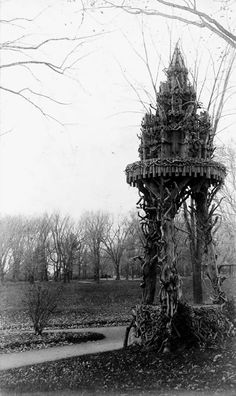
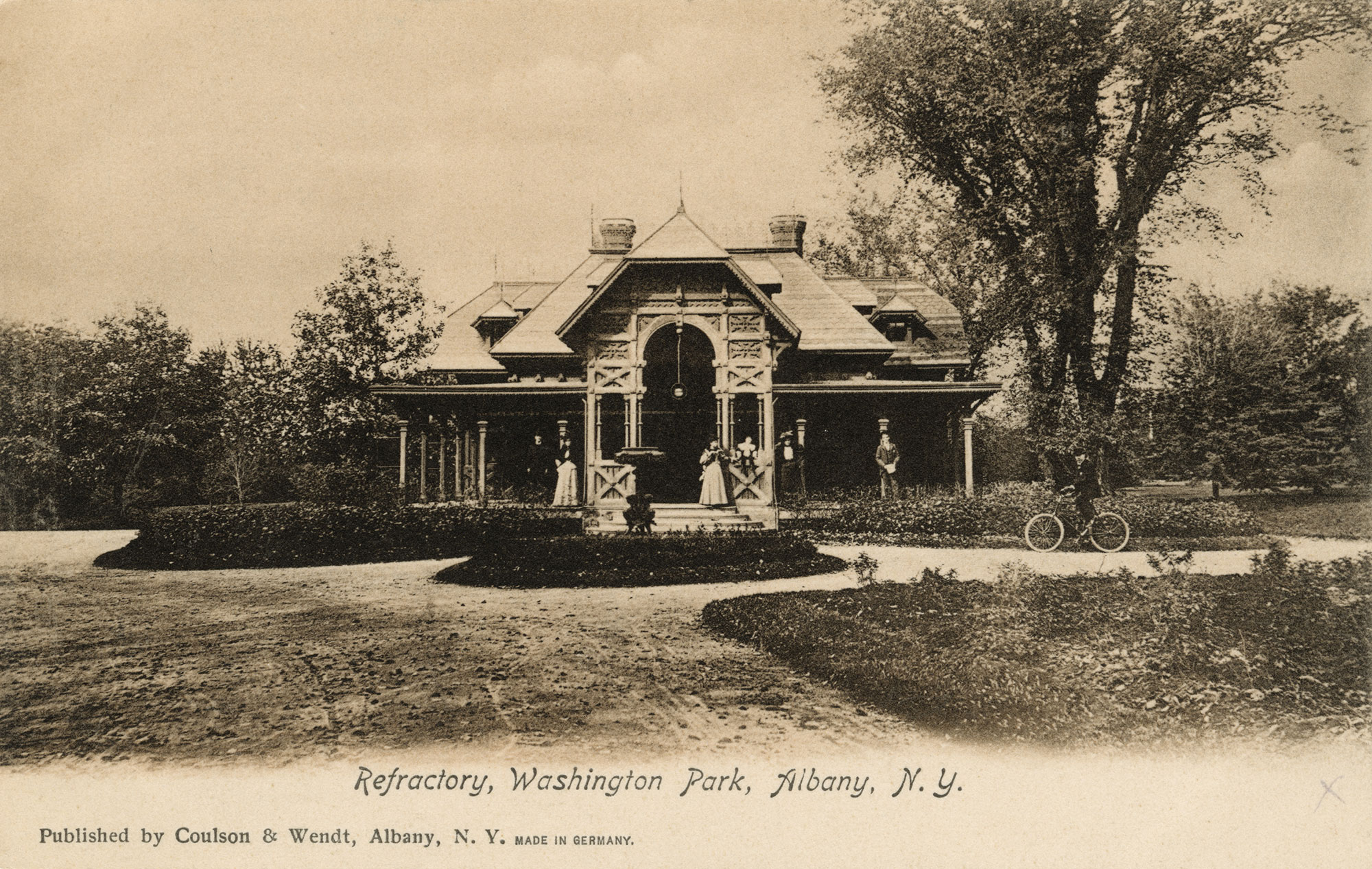
| 1872-3 | Refectory, fountain shelter, and rustic shelter overlooking the meadow are constructed. Swings are placed in park. |
| 1873 |
After the Board of Commissioners of Washington Park cancels its contract
with Bogart & Culyer and dispenses with the services of Bingham, William
S. Egerton, formerly assistant to Bingham, is appointed engineer in
charge. Additional lots are acquired in the western section of the park |
| 1874 |
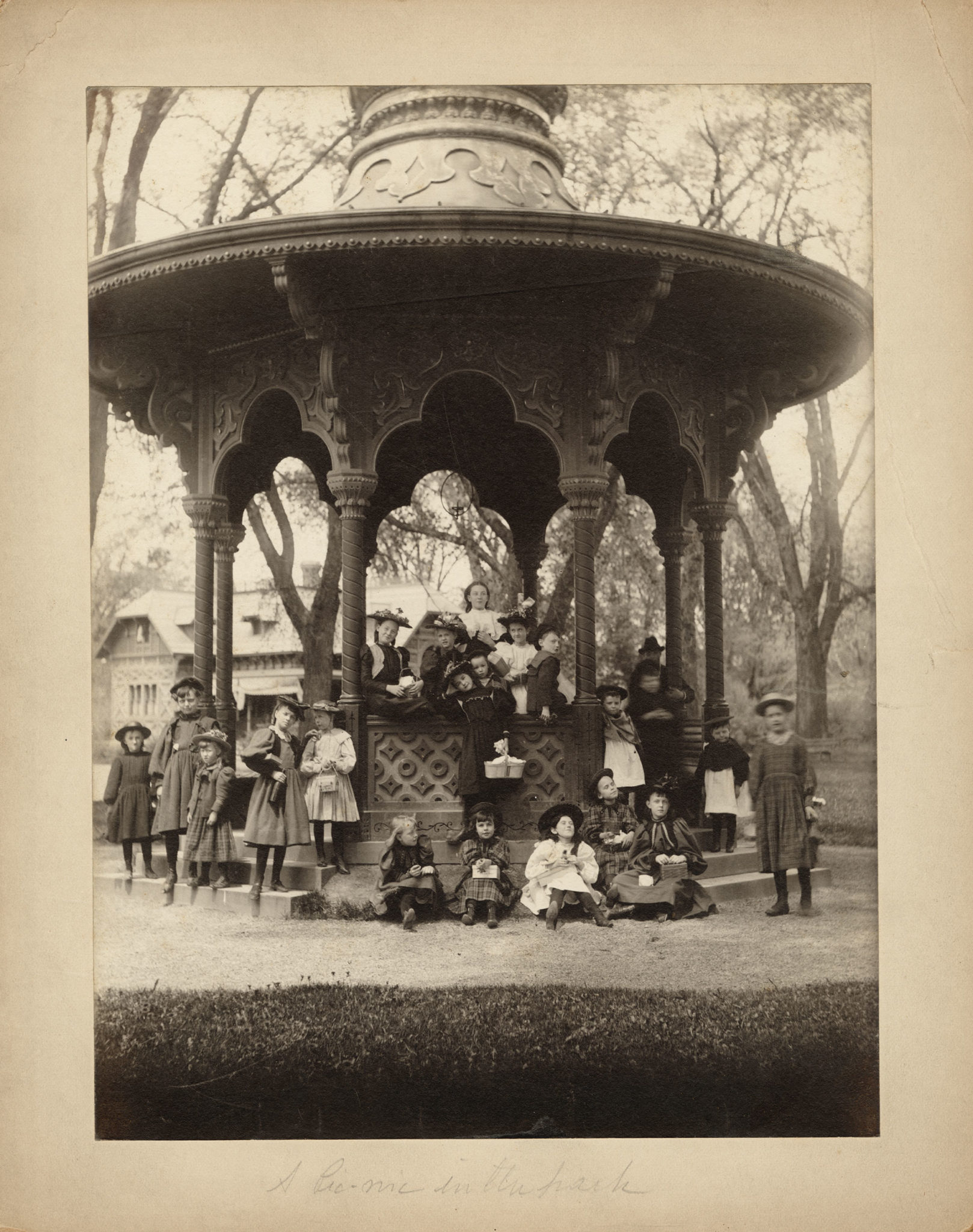
The croquet shelter and a rustic shelter near State Street are
constructed. A deer house and rustic birdhouses are built in park. A
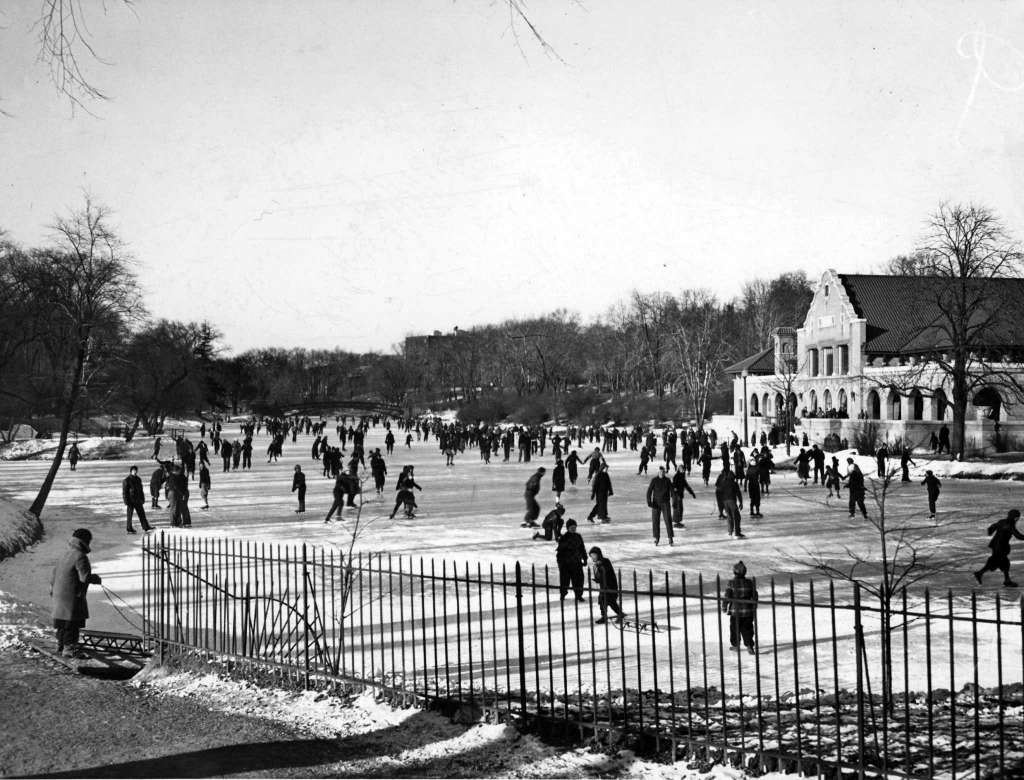
drinking fountain is placed at the corner of Hudson and Knox Streets. Skating is introduced on the lake during winter. |
| 1875 |
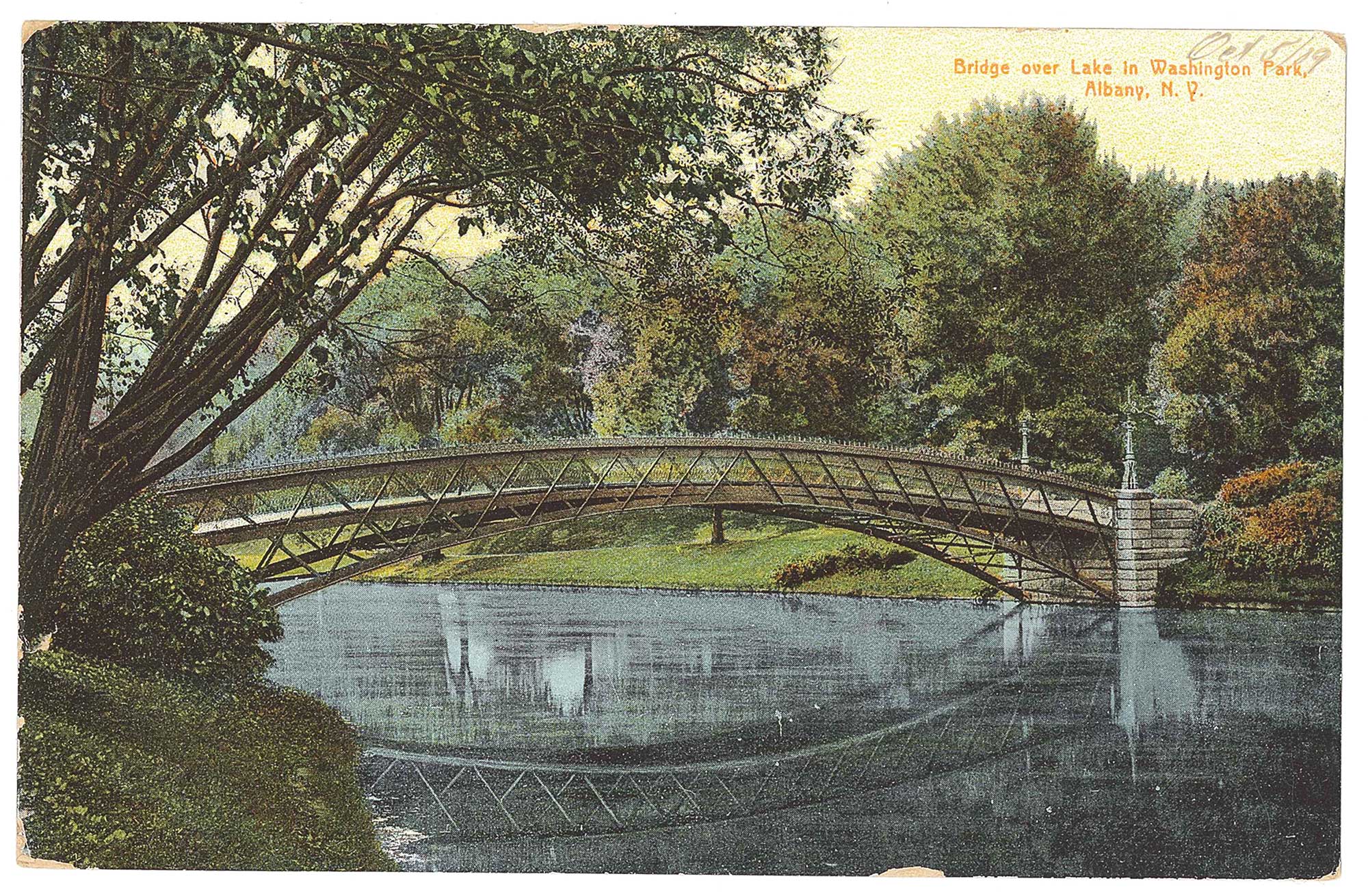
Oct.: The work of the Albany iron manufacturer T. J. Sullivan, the
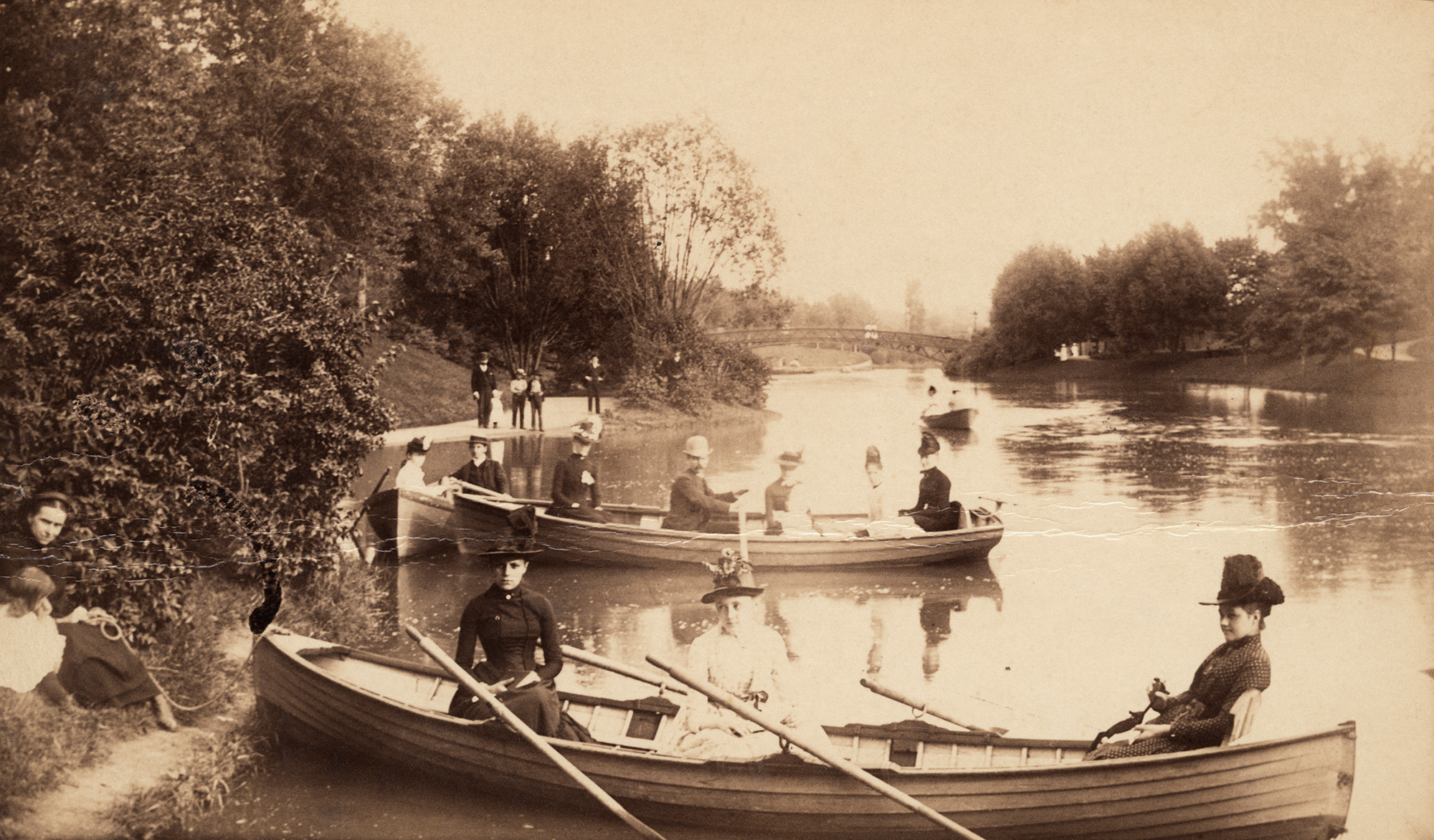
Washington Park footbridge spanning the lake is completed.
Boating is introduced; waterfowl are brought to park and lake is stocked with fish. |
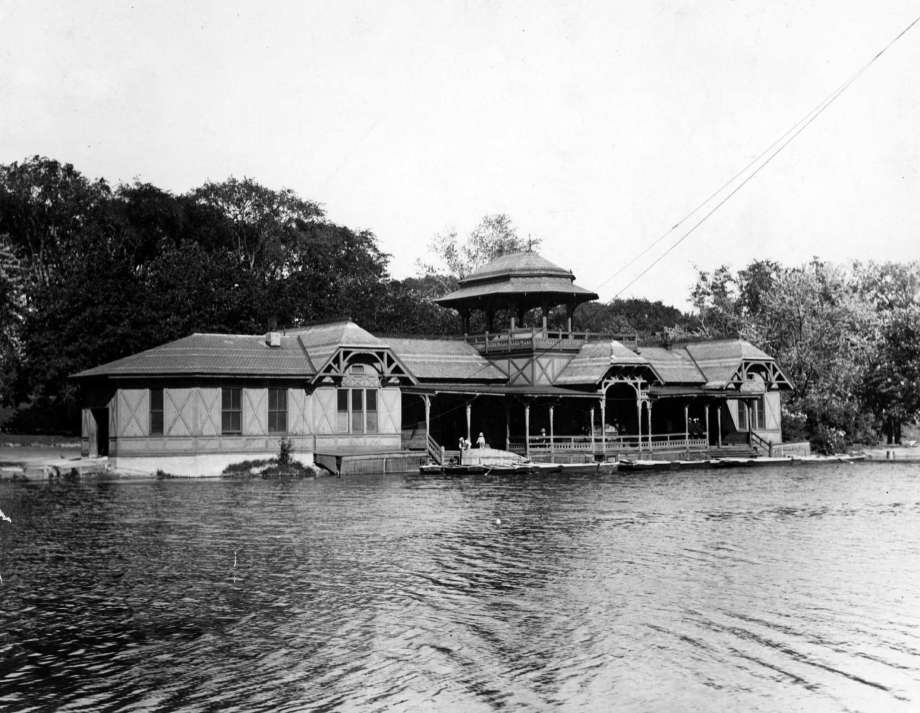
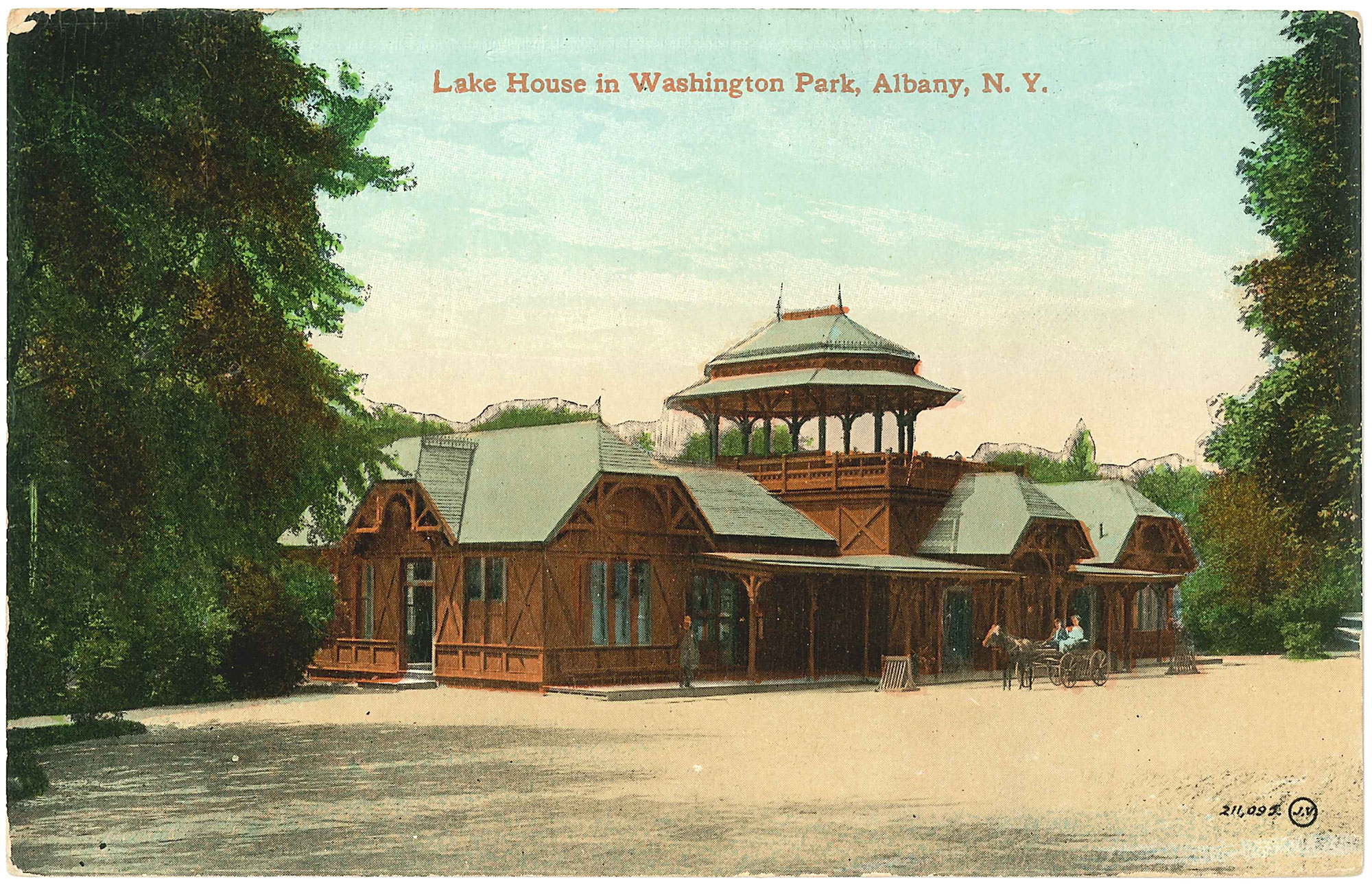
| 1876 | Jan 6: Built from designs by Frederick W. Brown, the lake house is opened to the public. |
| 1878 | 25,000 foliage and flowering plants are planted near Willett Street. |
| 1879 |
Nov. 21: Monument in memory of Dr. James H. Armsby (d. 3 Dec. 1875), a
founder of the Albany Medical College and Hospital, is dedicated; Erastus
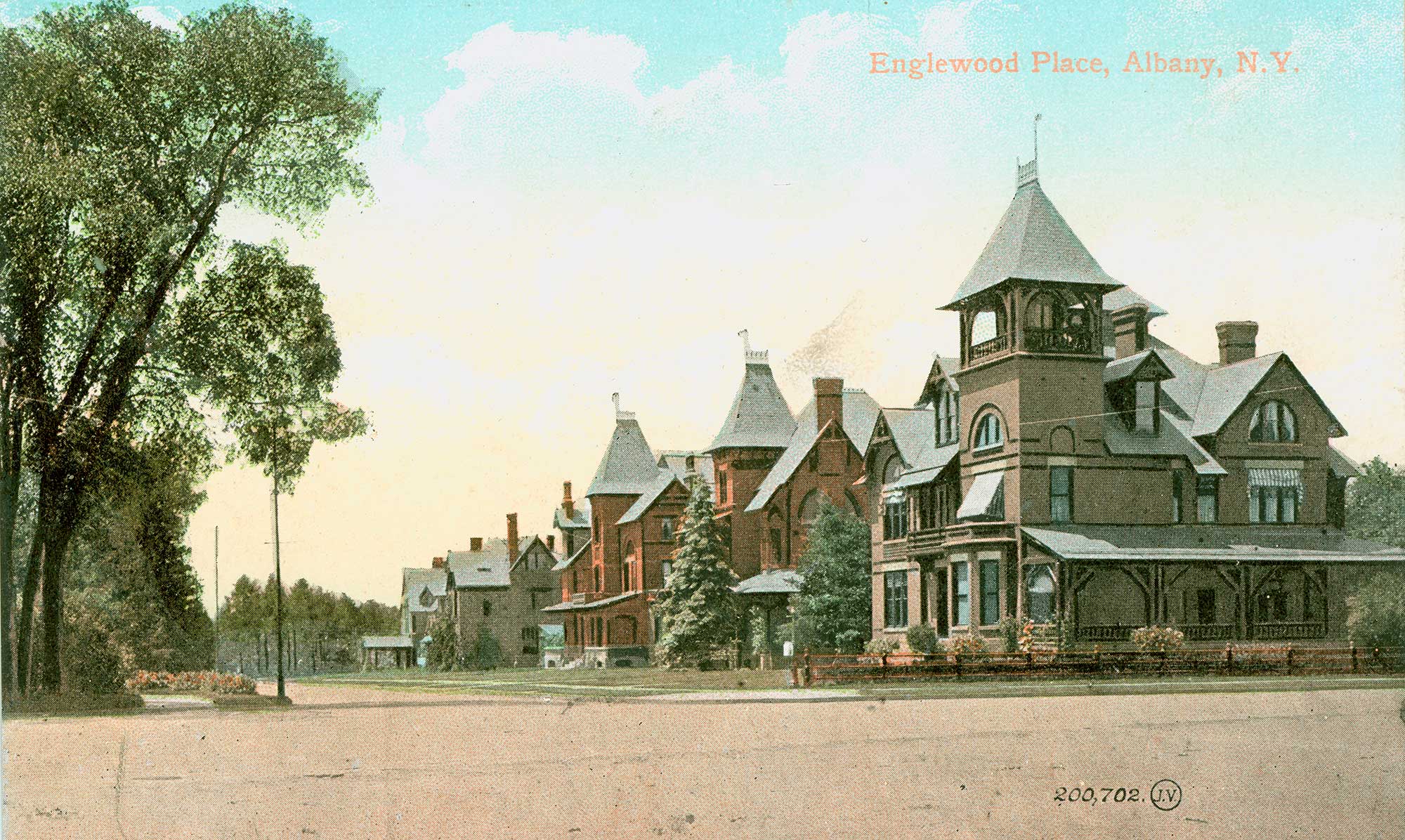
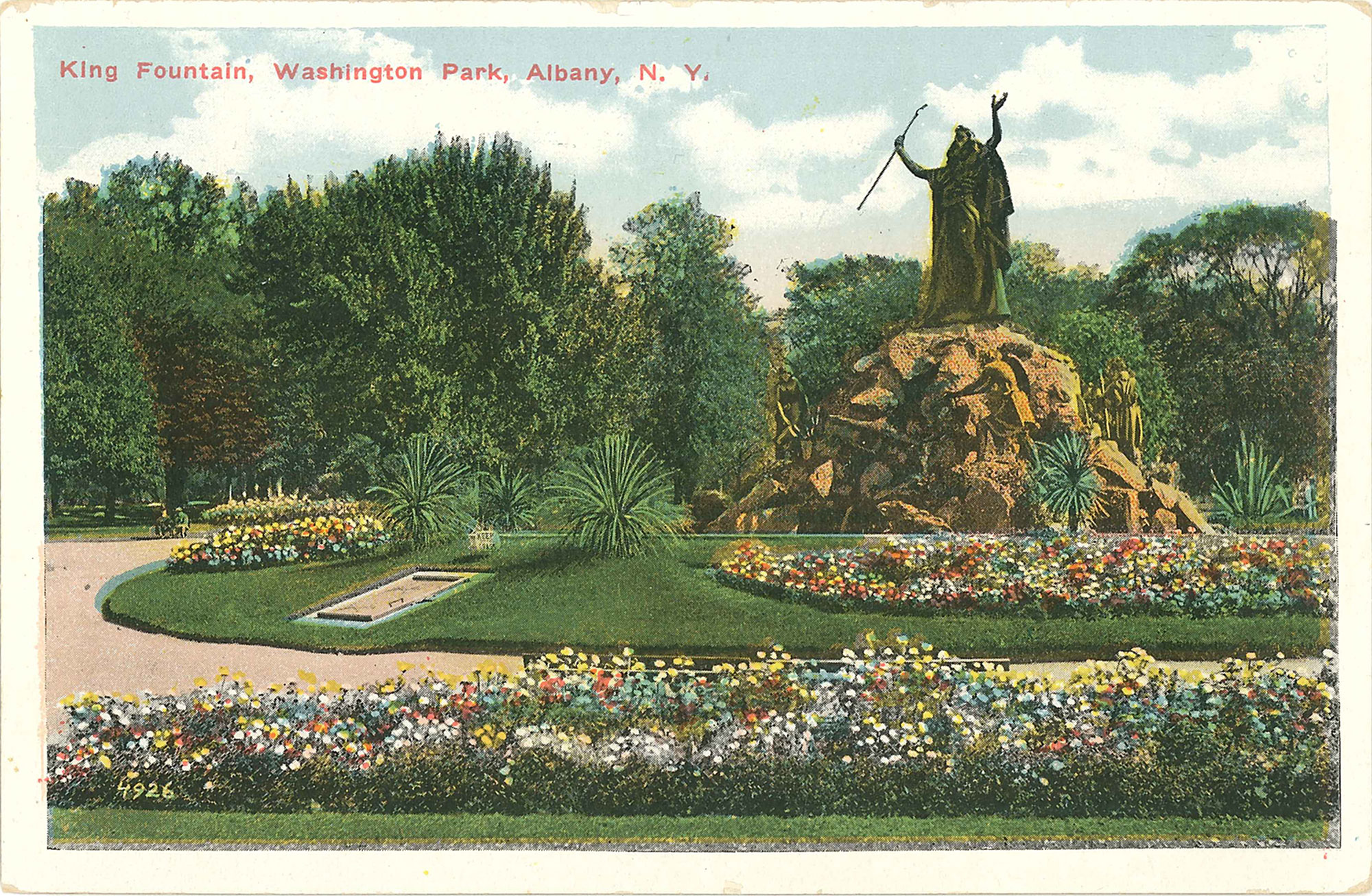
D. Palmer is the sculptor of the bust. Henry L. King leaves a bequest with which to erect a fountain in the park in memory of his father, Rufus H. King. Englewood Place is laid out and a new entrance is constructed leading to the lake circuit drive. |
| 1880 | Knox Street property, an area of approximately 9 acres, is added to the park. |
| 1881 |
Electric lights are introduced in the park. Plans are underway to lay out Thurlow Terrace and a new approach to the park. |
| 1882 | The Taylor property at the corner of Madison and Lake Avenues is purchased and conveyed to the Board of Commissioners of Washington Park as an addition to the park. |
| 1884 | The Evans-Pruyn House designed by Robert Gibson is constructed on Englewood Place at the northern boundary of the park. |
| 1888 |
Sept. 30: Designed by the sculptor Charles Calverly, the Robert Burns
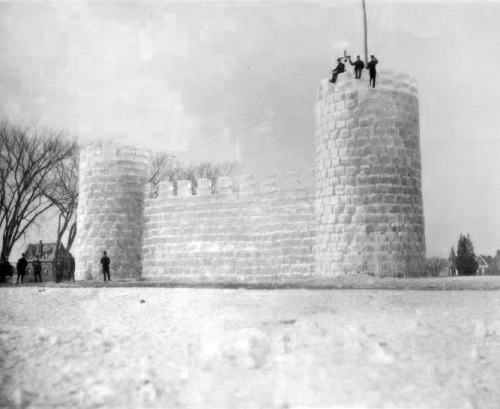
statue is unveiled. A large “ice palace” in the form of a fort is erected on the plateau at the corner of Madison and Lake Avenues east of the tennis grounds and dedicated with a display of fireworks. |
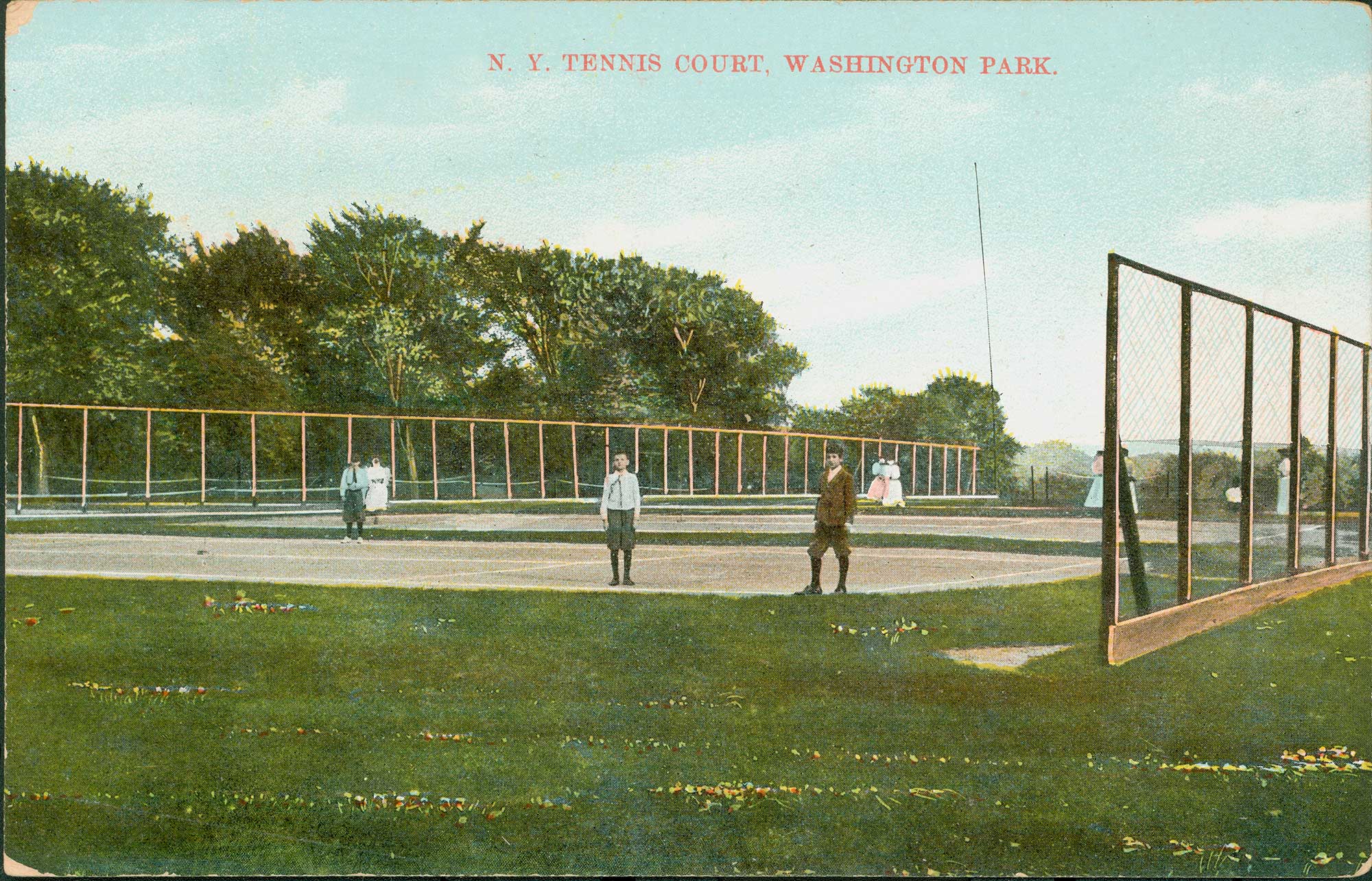
| 1889 | Lawn tennis is first played in the park. |
| 1889/90 | Aquatic plants are first featured along the borders of the lake. |
| 1891 | The
four relief panels of the Burns monument are inserted on the pedestal. Ogden & Wright, architects, repair the refectory. City acquires title to 68 acres of land known as Beaver Park (Lincoln Park). Aquatic garden is started at the eastern end of the lake. Charles LaDow house, designed by Ernest Hoffman, is built on Thurlow Terrace just north of the park. |
| 1892 | A
variety of hybrid tea roses is introduced. 2200 linear feet of gutters are laid on drives and walks. |
| 1893 |
Sept. 29: The King memorial fountain, the work of the sculptor J. Massey
Rhind, is finally unveiled. The first annual chrysanthemum show is held at the lake house. ‘Vernon” Begonia and hardy herbaceous plants are introduced. |
| 1895 | The lake is drained and cleaned of silt. |
| 1898 |
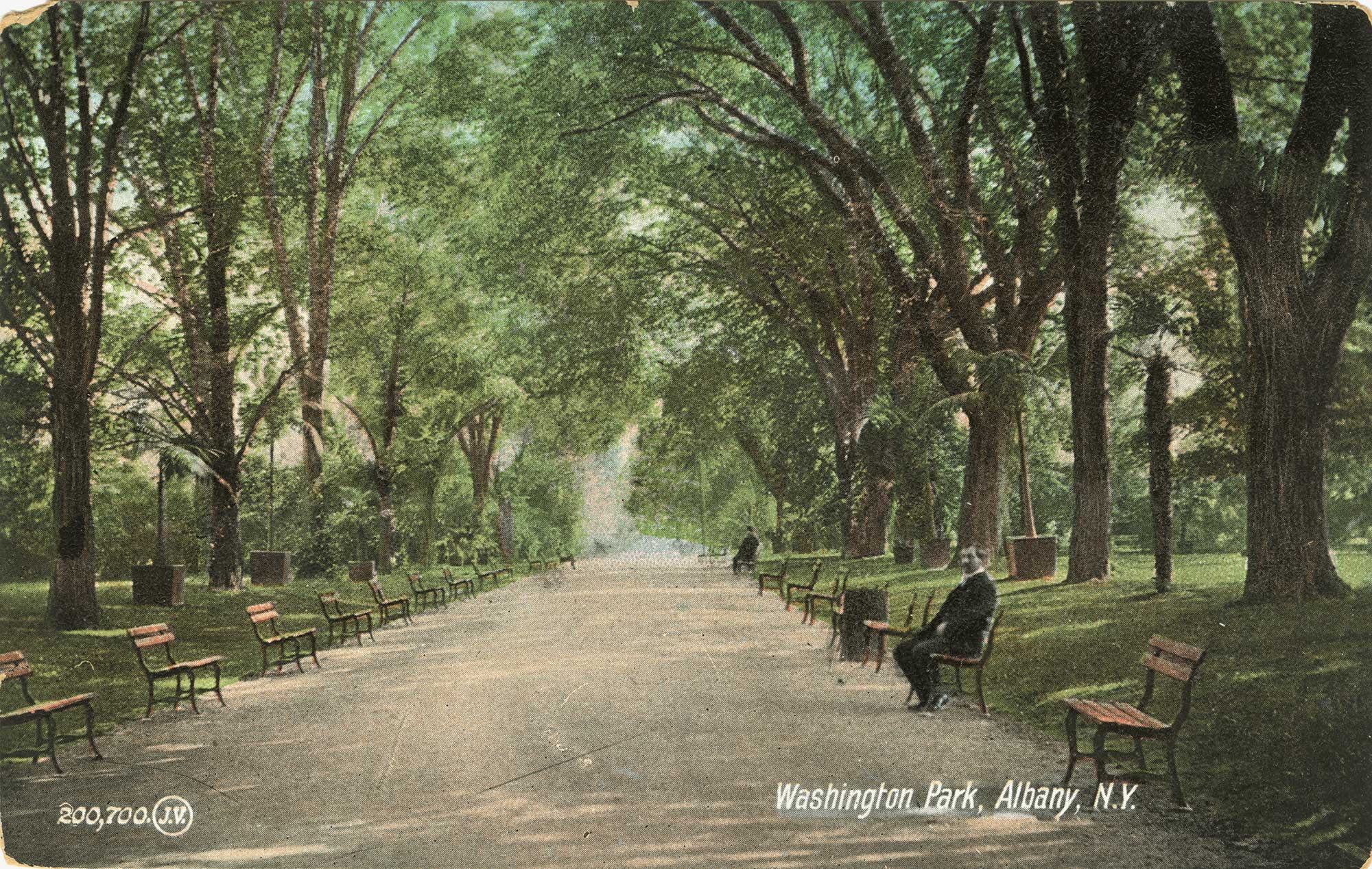
The elm leaf beetle is first discovered in the park. 50 new settees (benches) are acquired for Washington Park. The rustic shelter overlooking the central lawn is provided with a new roof. The walk approach to the bridge on the north side of the lake is reconstructed and laid in cement. |
| 1899 | The Board of Commissioners of Washington Park retires after thirty years of service. |
| 1900 |
The Bureau of Parks, a branch of the Department of public works, is
created through legislation to oversee the city’s parks. A vehicular and bicycle entrance is constructed at Knox Street path entrance and a walk is constructed leading from path entrance at Lexington Avenue across driveway towards the croquet ground. Drinking fountains are placed near bicycle entrance at Knox Street and adjacent to tennis grounds. |
| 1902 |
Tennis courts are graded and
resurfaced with clay.
Croquet house, well shelter, lake house and swings are repaired and repainted. Park Lake is lowered and edges cleaned. |
| 1903 | A steel wire fence is erected on the hill south of the lake bridge and north of the lake house on the terraced hill and about the swings, to protect the slopes and to confine or direct the public to the walks or established lines of transit. |
| 1907 | A large boulder is placed along the drive near Willett Street by the Sons of the Revolution, Philip Livingston Chapter, in memory of Col. Marinus Willett to commemorate his victories over the British during the Revolutionary War. |
| 1908 |
Superintendent Egerton ends his public employment after thirty-eight years
of association with Washington Park and is succeeded by Philip Bender. 32 new electric lights placed in the park |
| 1909 | New
tool house is constructed as an addition to the lake house. 300 shrubs of different varieties are purchased from Ellwanger & Barry nursery in Rochester and planted in the park to replace those which had died in previous years. 25 purple leaf maples and 40 other trees of different varieties are planted in Washington Park. A new water system connected to the Willett Street main is installed to provide a water supply for the Willett Street flowerbeds. A new fountain is placed in the well house near the swings. Shrubbery along Madison Avenue is cut down to the height of five feet. King fountain is repaired: stonework is pointed and statues are cleaned. Wooden flooring of bridge is replaced. Competition is held for the design of the Soldiers and Sailors Monument. |
| 1912 | As
a result of interest in city improvement on the part of the Albany Chamber
of Commerce, Arnold W. Brunner, architect and planner from New York, is
employed as expert advisor to the city in preparation of comprehensive
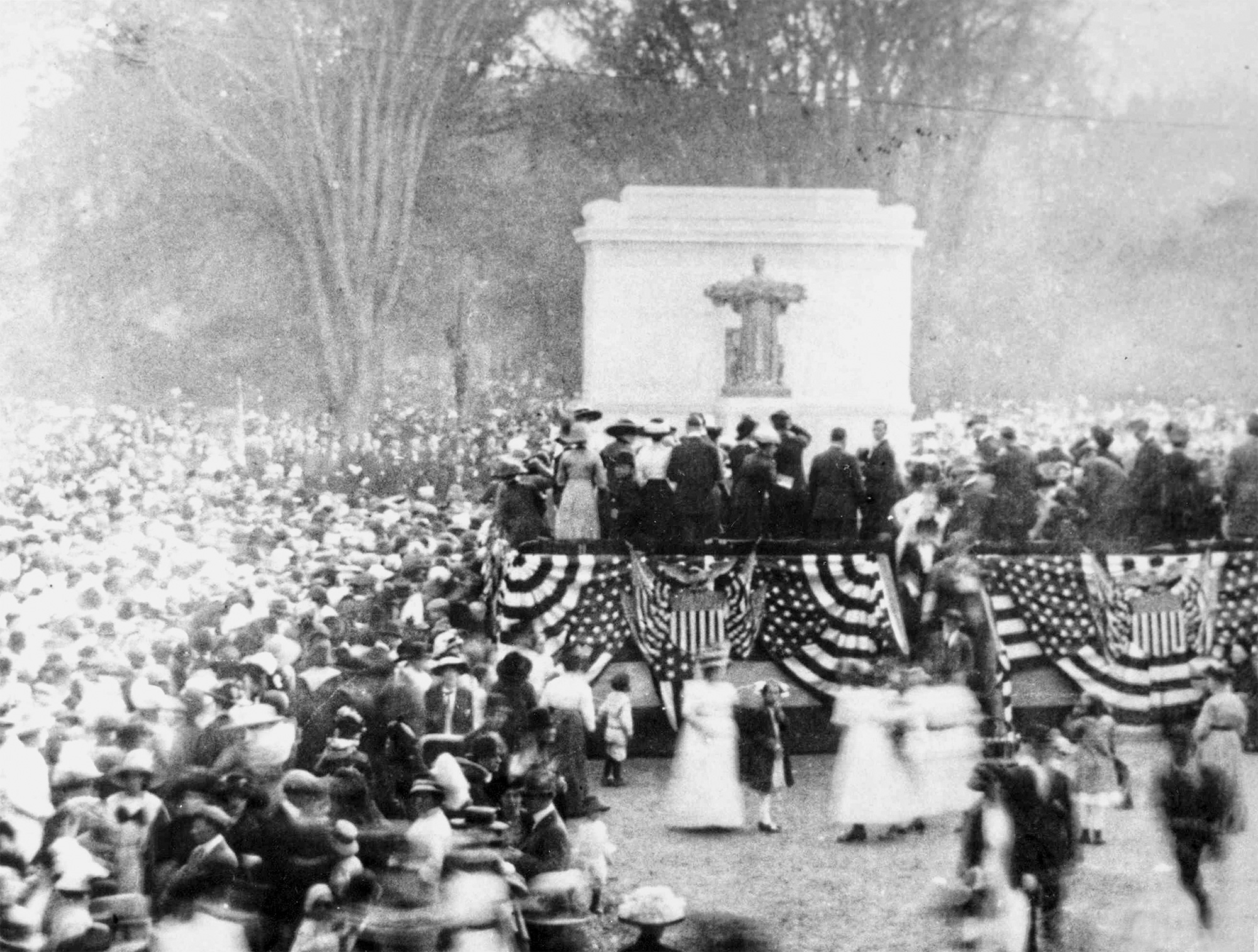
city plan. Oct. 5, The Soldiers and Sailors Monument is unveiled at the Northern Boulevard entrance to the park; Herman A. MacNeil, sculptor, and Lord & Hewlett, associate architects, designs the monument. New tennis courts are construct |
| 1916-7 | Under the direction of the city forester, the trees in the park are labeled. |
| 1919 | Poplar trees are removed from the park by the city forester. |
| 1922 | Water is drained from lake and bed is cleaned. |
| 1924 | Roads in park are resurfaced because of damage caused by automobiles. |
| 1927 |
$125,000 is appropriated for the construction of a new lake house. Barricades are placed in the park to block off roads to ensure the safety of children engaging in winter sports. |
| 1929 |
Oct. 14: The new boathouse is dedicated; foundation planting is added
around structure. New concrete roads (20’ wide 7” thick) are constructed in park. |
| 1932 | Roadways in the park are resurfaced with stone and asphalt. |
| 1933/46 | Dayton Stoner, a former state zoologist, and Lillian C. Stoner conduct field studies to document the birds of Washington Park. |
| 1935 | 100 trees are planted in the park |
| 1939 | 225 concrete benches are placed in Washington and other city parks. |
| 1940 |
Lake is drained to destroy growth of pondweed; the outlet is repaired. Park features display of 90,000 tulips during Tulip Week, bringing more visitors to the park than during previous 15 years. Over 100 trees are moved from the center plots of Washington Avenue to the parks, the greatest number planted in Washington Park. |
| 1943 | 40 trees and shrubs are planted in Washington and other city parks, including magnolia, smoke tree, tulip tree, fire bush. |
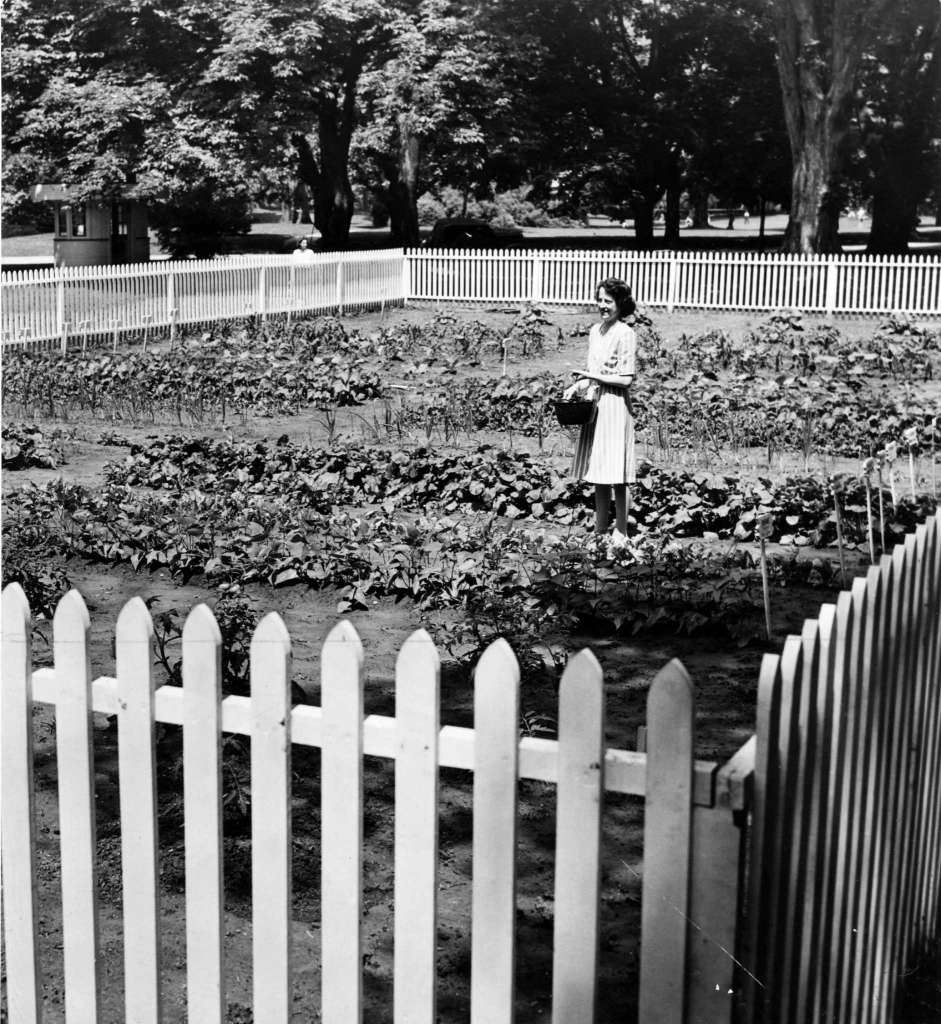
| 1944 | Victory Garden is planted in park |
| 1945 | Brickwork of several catch basins are repaired. |
| 1948 | Common Council passes an ordinance naming the tulip as Albany’s official flower. |
| 1949 |
The first annual Tulip
Festival is held.
Three of the clay tennis courts are changed into hard surface courts.
Old well house is torn down.
|
| 1953 |
Plan to extend Lancaster Street beyond Willet into the park is proposed by
officials of the Albany Kiwanis Club. A new six feet high-galvanized fence replaces old iron fence around east end of lake. |
| 1957 | Nine tennis courts in the park are covered with asphalt concrete. |
| 1958 | Isadore Candeub & Assoc. prepare master plan for city. |
| 1958-9 |
Despite protest by civic groups, a roadway is constructed west into the
park as an extension of Lancaster Street and the most easterly roadway
transversing the park is widened. As part of plan to ease traffic, Lancaster and State Streets are made one-way thoroughfares. |
| 1961-4 | After planting trees to the park, the Conservation Committee of the Albany Chapter of the Adirondack Mountain Inc. studies and identifies the trees in Washington Park. |
| 1968 | Public opposition mounts to the use of the park for a cross-town arterial highway. Park roads are resurfaced with bituminous concrete. |
| 1971 | Albany Chapter of Adirondack Mountain Club donates shade bushes and American plane trees, which are planted near Englewood Place on the hill overlooking the lake. The City receives grant of $70,000 from the federal Bureau of Outdoor Recreation with which to build four hard surface tennis courts and four handball courts and to add fencing and utilities. |
| 1972 |
Washington Park Historic District is listed on the National Register of
Historic Places. Repairs are made to the bridge at lake. The first winter Carnival in 87 years is held. Roads at northern end of park at Thurlow Terrace and Englewood Place are closed to traffic, and entrance road at Lake Avenue is removed and a bicycle path constructed. Federal grant of $24,000 is earmarked to assist city with revitalizing the park; a new boat concession begins, bicycles are supplied, and a youth recreation program is funded 10 crabapple trees are planted along Knox Street sidewalk; evergreens, flowering trees and shrubs are planted in the area of the croquet ground. |
| 1973 | A scooter patrol is established to enforce traffic regulation and parking arrangements in the park. |
| 1977 | Lake is drained and cleaned for the first time in several years. Park Coalition group urges a weekend ban on motor vehicles. |
| 1978 | Albany St. Andrew Society sponsors the cleaning of the Robert Burns monument. |
| 1979 |
Common Council appropriates $70,000 to repair the exterior of the lake
house. Old lilac bushes along Willett Street and Madison Ave. are cut down and replaced with crab apple and mountain ash trees. Upon request of Washington Park Neighborhood Association, two interior roads are closed to traffic with chain and post barriers. Grant is awarded to resurface tennis, handball, and basketball courts. |
| 1984 |
Friends of Washington Park is established to promote the needs of the
park. High intensity streetlights are installed in the park. Lake is treated with chemicals to kill weeds and algae growth. Paddleboat concession is started at lake house. 1985 Washington Park Conservancy is founded. The Washington Park Historic District is included within the newly designated Albany Urban Cultural Park. Park’s vegetation is studied and 90 species are identified in the park. 1986 Lake spillway is repaired |
| Conservancy | |